

An AI tool gives a student the right answer. Has the student actually learned anything? For an August 2026 seminar, BoMinds turned that ordinary classroom situation into the starting point for philosophy. Its programme invited students to consider what it means to know something, possess an ability, and learn in a world where machines can complete increasingly complex tasks. It offered questions to examine, not a list of approved answers.
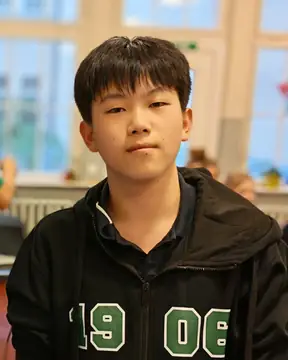
Behind BoMinds is Cao Mingzhe, also known as Vold, a class-of-2028 student in the international division of Beijing No. 80 High School. He also founded Inkstone and the iPhilosophy discussion society, and pursues independent interests in philosophy, astronomy, and artificial intelligence. His work on BoMinds combines the intellectual and the practical: planning activities, building partnerships, handling operations, and helping people find the project.
That organizing work now involves a wider circle of collaborators. As of September 2026, BoMinds publicly lists 12 partner student clubs and organizations, spanning philosophy, debate, classics, history, and economics. They include UHHC, the Chickpea Classics Institute EconMindOS, and the philosophy club at the Pennington School (New Jersey). These partnerships connect Cao with students already building intellectual communities of their own, providing opportunities to develop discussions and collaborative activities together.
Its Chinese name, Boming, combines broad learning with clear discernment. It draws on The Doctrine of the Mean, a classical Chinese text linking learning with questioning, careful thought, judgment, and action. The underlying idea is accessible: education should develop judgment, not simply the ability to repeat information.
BoMinds carries that idea into talks, reading materials, seminars, and student communities for Chinese teenagers. Its stated aim is not to make everyone agree. Instead, it seeks to help young people distinguish facts from values, explain their judgments, listen seriously to disagreement, and work with others on difficult questions. Independent thought and the ability to cooperate are treated as parts of the same education.
The AI seminar made this approach concrete. Its plan placed student speakers alongside a philosophy professor and a school principal, who would respond to their arguments. Participants would test their views by changing the circumstances of a case and considering counterexamples. The question was not which career would survive technological change, but what a person still needs to understand and be able to do for themselves.
A September 2026 initiative moved from discussion toward collective writing. BoMinds invited teenagers to help develop a proposal on the future of education, intended for submission to UNESCO, the United Nations’ education, science and culture agency. Participants could read a draft, leave comments, disagree with its arguments, and suggest revisions. Public speaking was not a requirement. A thoughtful written objection could also become a contribution to the final text.
The education proposal also offers an early picture of how participation is taking shape. BoMinds’ published activity account records 59 people joining the activity group. Alongside its seminars and reading groups, this collaborative writing adds another form of participation to the programme and shows how BoMinds can move between discussion, consultation, and collaborative work.
As BoMinds grows, its work continues to explore how students can take a more active role in shaping their own intellectual environments. Through discussions, collaborations, and educational initiatives, the organization seeks to build a community where young people are encouraged not only to learn from existing knowledge, but also to question, contribute, and create. Its future activities can take many forms, but the underlying purpose remains the same: connecting students with new ideas, with one another, and with opportunities to take their own thinking seriously.1
Endnotes
- ChatGPT is listed as an author because it contributed substantive writing and/or polishing to this published work. This credit does not mean that ChatGPT originated the topic or ideas; the core argument and the final editorial responsibility remain with the human author. back